National Geographic Health recently highlighted emerging research on psilocybin-assisted therapy for patients facing advanced cancer and end-of-life distress. The article features commentary from Sunstone’s CEO and a recent trial patient, and explores how psychedelic-assisted therapy may help reduce depression, anxiety, and existential suffering when delivered within structured clinical settings.
Published February 11, 2026
A recent National Geographic health feature explores the emerging role of psilocybin in addressing the profound psychological and existential distress that often accompanies advanced illness and end-of-life care.
The article underscores what many patients and clinicians have long recognized: while modern oncology has made extraordinary advances in treating disease, the emotional suffering that can accompany a cancer diagnosis remains insufficiently addressed.
Drawing on clinical research and patient stories, the piece highlights evidence demonstrating that psilocybin-assisted therapy may significantly reduce depression, anxiety, demoralization, and existential distress in people facing serious illness. In some studies, a single guided session—combined with structured psychological preparation and integration—has led to sustained improvements in mental health outcomes.
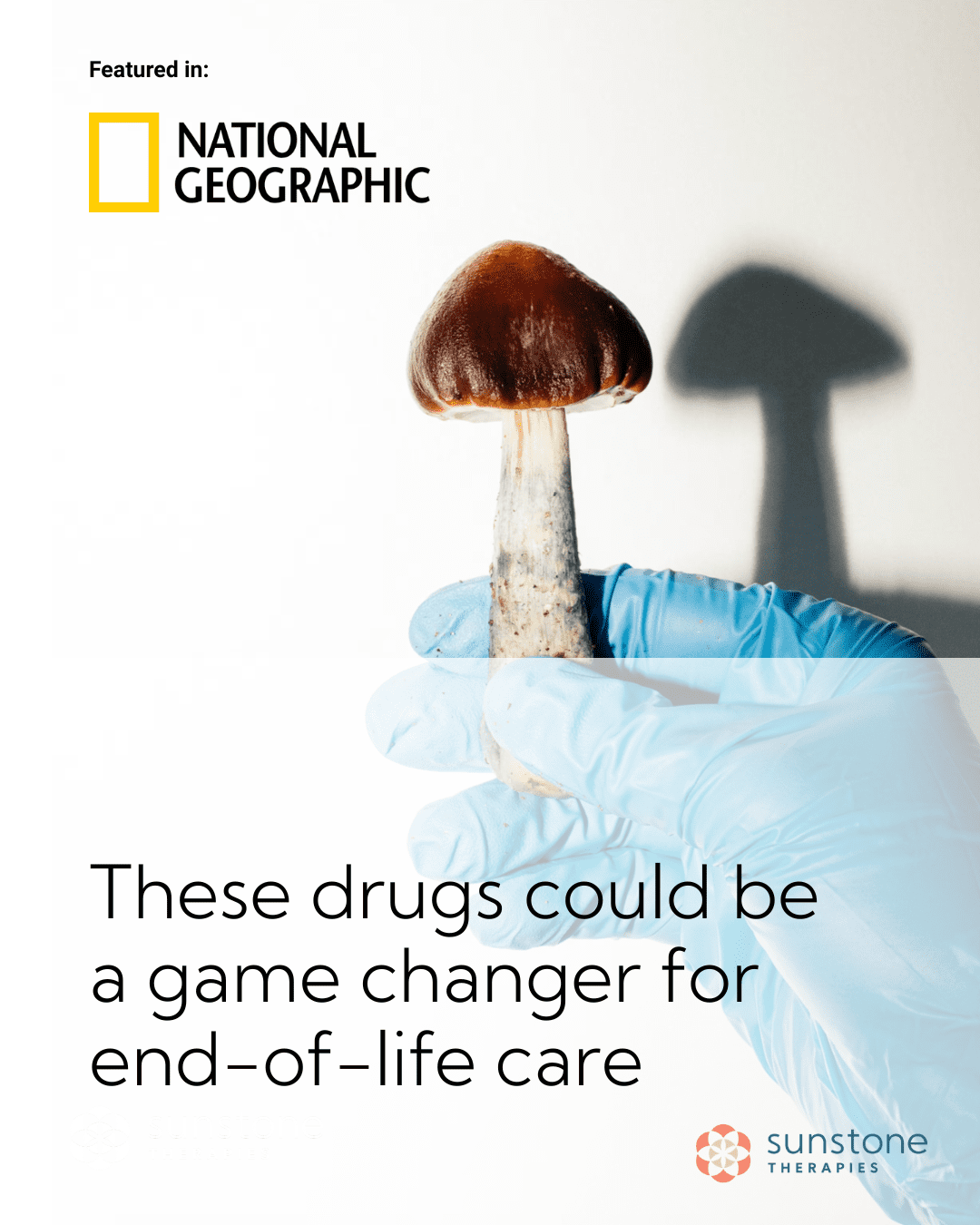
The article features commentary from Sunstone’s CEO, Manish Agrawal, MD, who emphasizes that psychedelic therapies do not treat cancer itself; rather, they may help patients reinterpret their experience, reconnect with meaning, and alleviate deep psychological suffering that conventional treatments often leave untouched. The piece also includes the perspective of a Sunstone patient who participated in psilocybin-assisted therapy, offering first-hand insight into how this approach can shift fear, restore a sense of connection, and meaningfully improve quality of life in the context of serious illness.
Importantly, the piece also addresses the current regulatory landscape in the United States, where psilocybin remains a Schedule I substance and is available primarily through clinical trials. As federal agencies evaluate potential rescheduling and expanded research pathways, many palliative care physicians argue that patients with advanced illness deserve access to carefully studied options that address whole-person distress.
At Sunstone, we remain committed to advancing rigorous clinical research and ethical, compassionate care models designed to meet that need.