Sunstone Therapies is embarking on a pivotal new Investigator Initiated Study, a Phase 2, open-label trial to investigate the use of psilocybin therapy for women survivors of sexual assault (SA). This trial aims to address a long-standing gap in medical research and to bring the voices of survivors of SA to the forefront of the conversation about trauma and healing.
Why This Study Matters
Sexual assault (SA) is an interpersonal trauma that significantly impacts a person’s sense of safety and trust. The consequences can be profound and chronic, leading to conditions like PTSD, depression, anxiety, eating disorders, and chronic pain.
SA is a common form of trauma: According to the National Intimate Partner and Sexual Violence Survey (NISVS, 2016-17), over 40% of women in the U.S. have experienced some form of contact sexual violence (rape, sexual coercion, or unwanted sexual contact) during their lifetime. Even if it hasn’t happened to you personally, it has likely impacted someone you know and care about.
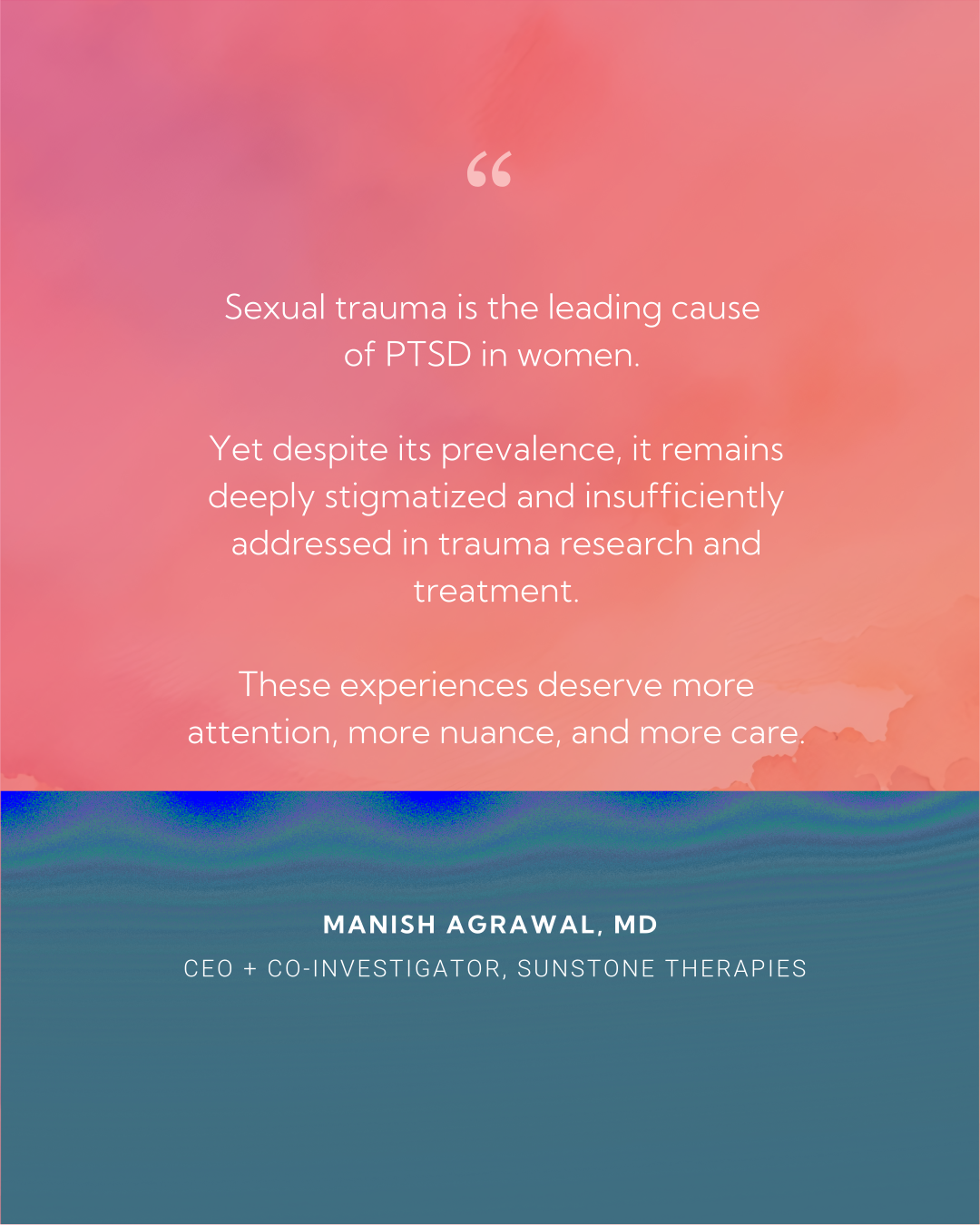
SA is one of the leading causes of PTSD in women and current treatment options are often inadequate. Common antidepressants, like SSRIs, have low remission rates, and long-term studies show that sexual assault survivors who take these medications may experience higher rates of PTSD or depression over time.
Evidence-based trauma focused therapies – such as cognitive processing therapy (CPT), prolonged exposure therapy (PE), and trauma-focused cognitive behavioral therapy (TF-CBT) – are often used and are considered a first line intervention for PTSD.
These therapies can be very helpful for some but do not effectively treat PTSD for everyone and can be emotionally distressing, which may make it hard for people to continue over time. There is a critical need for new gender-sensitive and trauma-informed treatment options that have the potential to improve outcomes and accelerate timelines for patients.
Historically, the experiences of women who have survived SA have been underrepresented in medical discourse. While the experiences of these women have significantly contributed to our understanding of PTSD, their narratives have frequently been marginalized. Underrepresentation is a persistent problem in psychedelic therapy research.
Sunstone’s new study challenges this legacy by moving away from a traditional, medicalized, and top-down approach.
What We Are Trying to Explore
A central component of this study is a shared decision-making (SDM) framework which follows principles of trauma-informed care. This collaborative process puts the participant in control of their healing journey, empowering them to make informed choices about their care. The SDM approach prioritizes the patient’s values, preferences, and cultural context in order to build trust, mitigate the risk of re-traumatization, and give back the participants’ agency that may have been violated. This patient centered approach acknowledges that trust may not be possible at the start of the journey and must be built incrementally, through transparent communication and personalized care.
The SDM framework includes ongoing conversations where the participant can provide input on key elements of the trial; for example, suggesting aspects of the treatment room environment (i.e. personal items present, blinds drawn), facilitator preference (i.e. requesting a female or male therapist), and preferences for support.
This study is designed to be fundamentally patient-led, patient-focused, and exploratory. Unlike most clinical trials, which follow a top-down, one-size-fits-all model, this trial is co-designed with participants to prioritize their unique needs.
A typical clinical trial is more of a medicalized, top-down approach where clinicians design the process the participant is led through. In this study we aim to challenge that model by implementing a shared decision making approach, where clinicians and participants design the context, the conditions, and the understanding of the participant’s needs together.
I believe that we cannot treat all traumas the same. And that is specifically what we’re aiming to do in this study, to learn how to listen in a different way.
– Carolina Maggio, MBACP, Co-Investigator for the SUN004 Study
Sunstone’s protocol is designed to prioritize safety and trauma-informed care and participants will be supported throughout their experience in each interaction with the Sunstone clinical team. The treatment model for this study includes three preparatory sessions, one dosing session, and three integration sessions where participants will be supported by one primary therapist, and in certain sessions an assisting therapist. The team prioritizes trauma-responsive care, grounding every aspect of the therapeutic and research process in moment-to-moment responsiveness to the participant’s needs, boundaries, and shifting internal states.
One component that sets this study apart is a long-term integration period of monthly group sessions with other trial participants that can last up to a year. We aim to explore the impacts of this supportive offering, recognizing that healing does not end after a dosing session and is an ongoing experience.
This trial is exploratory, with the aim of gathering insights rather than proving predefined endpoints. Healing from trauma is not a linear process, and this flexible approach is better suited to capture the complexity of a person’s experience.
Looking Ahead
By focusing on this historically underserved population, we aim to give voice to their experiences and build a foundation for future research. This study will not only provide much-needed data on gender-sensitive and trauma-informed approaches, but also lay the groundwork for scalable and effective interventions.
We hope this will be the first of many such studies as this issue affects everyone in our society: We recognize there is a great need to investigate the efficacy of this intervention in other populations as well, whose experiences of SA remain underrepresented in research.
Learn More
Visit our Clinical Trials page to learn more about eligibility, the enrollment process, and how to apply.