Psychedelic-assisted therapy is neither a rapid cure nor a solely pharmacological intervention.
When administered within a structured, supervised clinical framework with evidence-based psychological support, psychedelics can drive therapeutic outcomes in mental health treatment. At Sunstone, we approach psychedelic-assisted therapy through interconnected components of care to equip participants with sustainable tools for their ongoing growth.
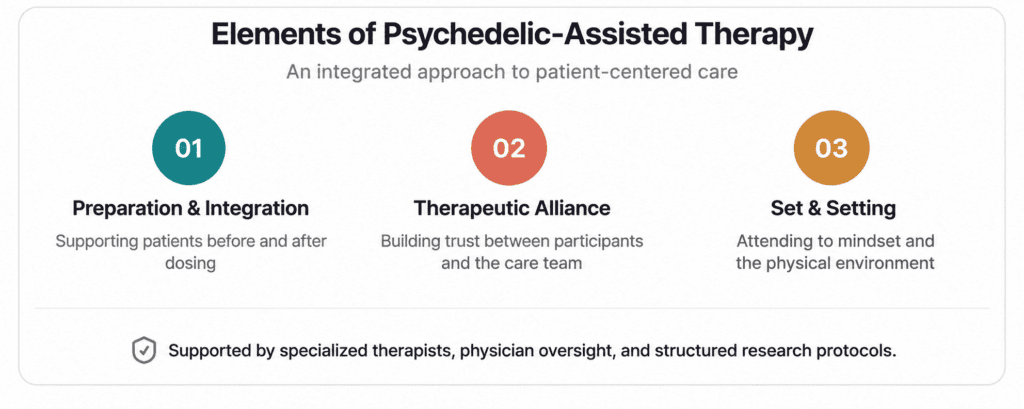
Supported by specialized therapists, physician oversight, and structured research protocols, psychedelic-assisted therapy at Sunstone is delivered through three key evidence-based elements:
- Intentional preparation and integration.
- A strong therapeutic alliance between the participant and care team.
- Optimization of set, or mindset, and setting, the physical environment.
Intentional Preparation and Integration
Preparation and integration sessions provide continuity before and after psychedelic dosing sessions with psychological support from Sunstone therapists. While protocols vary, there are typically three preparation sessions before dosing, and three integration sessions after dosing.
Preparation
Preparation sessions foster a therapeutic alliance between participants and their therapists, promote understanding and readiness for the therapeutic process, and address personal histories, preferences, and boundaries. The focus of these sessions can vary to reflect the needs of the participant, but the following elements are consistent.
- Trust: Preparation allows participants to establish rapport with their Sunstone therapists prior to dosing. Consistent and familiar support fosters a sense of safety, allowing participants to focus on their internal experience. These sessions also clarify therapist roles, establish safety protocols, and demystify clinical processes.
- Readiness: Preparation equips participants with practical tools and insights before dosing. Therapists outline the dosing trajectory and help manage expectations, empowering participants to approach the experience with curiosity, openness, and psychological readiness.
- Boundaries and Consent: Care preferences and boundaries are communicated during preparation. For example, the role of supportive physical touch is collaboratively established, and participants share their history to the extent and pace they prefer. Ongoing consent ensures participant autonomy throughout the therapeutic process.
Integration
Integration sessions provide participants with an opportunity to start the ongoing process of exploring their dosing experience. Therapists support participants with the variety of emotions that may arise and use non-directive techniques that encourage reflection without imposing interpretations or assumptions.
- Support: Post-dose conversations provide the space to explore emerging emotions, questions, and any experiences that feel meaningful or remain hard to understand.
- Processing: Therapists help participants articulate, interpret, and derive meaning from their dosing experience at a comfortable pace.
- Translation: Integration can help participants translate insights into lasting cognitive and behavioral change, fostering sustainable personal growth.
Therapeutic Alliance and the Ecosystem of Care
Relational safety is foundational to driving therapeutic outcomes in psychedelic-assisted therapy. Psychedelic experiences can involve heightened suggestibility, vulnerability, and the emergence of difficult material. Consistent and trusting therapeutic relationships ensure participants are supported to navigate their experience.
- Therapist-Patient Relationship: A safe, collaborative, and trusting dynamic allows participants to explore deep personal material and feel empowered to communicate their needs.
- Clinic-Wide Engagement: The therapeutic alliance extends to all Sunstone staff. Every touchpoint is curated to ensure participants feel welcomed, supported, and confident in their care.
Optimization of Set & Setting
“Set” and “setting” are the psychological and physical context in which psychedelic-assisted therapy takes place. The optimization of these environments demonstrates Sunstone’s careful attention to the delivery of this treatment.
- Set: “Set”’ refers to a participant’s psychological state and mindset that can influence the dosing experience. Throughout preparation, therapists address attitudes, expectations, and personal context to encourage a mindset grounded in trust and openness.
- Setting: “Setting” encompasses the physical and interpersonal clinical environment. Sunstone’s clinical spaces are intentionally designed to minimize external disruptions. Elements such as adjustable lighting, artwork, natural light, comfortable furnishings, curated music, and familiar clinical staff combine to create an environment conducive to deep therapeutic work.
Our Therapeutic Approach
Sunstone’s therapeutic model draws on non-directive and person-centered approaches. Psychedelic experiences vary considerably, and the treatment process may involve a fluctuation of moments of insight and periods of uncertainty. Our therapists provide a structured, supportive environment for participants to engage with their experiences in personally relevant ways without imposing their interpretation or values. This approach aims to empower individual agency, drive therapeutic trust, and support each participant’s own capacity for reflection and meaning-making.
As psychedelic-assisted therapy continues to be studied, understanding the relationship between drug effects, therapeutic support, and the broader clinical environment remains an important area of inquiry. Our framework reflects our commitment to studying psychedelic-assisted therapy with clinical rigor while remaining attentive to the complexity and variability of each participant’s experience.